Ambiguous grief FAQs
What is ambiguous grief?
Grief is messy, uncomfortable, and can be deeply unsettling. The American Psychological Society defines grief as, “Grief often includes physiological distress, separation anxiety, confusion, yearning, obsessive dwelling on the past, and apprehension about the future.” Grief is most often associated with the loss of a life, where there are often rituals and practice to guide how members of a community grieve and define closure.
There is also ambiguous grief which is loss in connection to someone or some place of meaning and a lack of closure or resolution. Ambiguous grief can surface from a change in abilities, becoming a caregiver, relational loss, or be career driven. Often we don’t acknowledge the grief associated with these losses and there can be shame around not “just getting over” or “moving on” from these losses, especially where there’s a lack of closure.
Definition of ambiguous grief
One of the things which makes grief so uncomfortable to discuss or find support around is there’s a lot of ambiguity and uncertainty. There are tools and resources around grief, but the experience of grief is deeply personal and can require uncomfortable introspection. It’s not “bite size” or fixable through an Instagram deep dive. Grief can also make others very uncomfortable to acknowledge brutal truths of living. As a counselor, I’m here to normalize and explore the experience of ambiguous grief, because unfortunately there’s plenty of grief to go around (ambiguous or not).
What causes ambiguous grief?
Someone may be completely knocked off their feet with grief in one situation, and it could be more of an inconvenience for someone else. It could come from changes in abilities of a loved one, a relationship status change, career, or situational or environmental change. Grief is unique as the layers, stages, and impact can vary from person to person.

Examples of ambiguous grief
A change in abilities
I conceptualize a change in abilities this easiest by thinking of an elite or professional athlete having a forced retirement through injury. Consider all the changes which will come with a career ending injury. Often a career ending injury occurs unexpectedly, with none of the fanfare and preparation of a planned retirement. In addition to the medical and physical aspects of a career ending injury the athlete has to contend with:
The loss of community and resources
A loss of structure and routine
Body image shifts
Changes in identity as an athlete or even athletic person
Changing roles in relationship responsibilities or roles
The consequences of an injury becomes more substantial and empathy building when you consider the mental and relational factors to this hypothetical injured athlete. These considerations though can have parallels to anyone who experiences an injury or change in health status (like with a cancer diagnosis).
Assuming a caretaker role
This cause for ambiguous grief is gaining more traction in conversations around the so-called sandwich generation, who is facing caretaking responsibilities for their children and aging parents. It can be a jarring adjustment to find a role in a relationship changing through caretaking. This can occur when a person is still physically here, but the capacity to interact with them has changed. Examples of this can include relating or caretaking for a family member with Alzheimer’s or dementia.
There is exhaustion and frustration for both parties in adjusting to different abilities and greater dependence on someone. Especially with Alzheimer’s or dementia, the person is still here, but many of the aspects of who you loved and connected with are infrequent or no longer present. The person in the caretaker role has also lost aspects of their freedom and autonomy. It can be isolating and sudden to find their time dedicated to caretaking. The relationship is markedly different and it can’t go back to where things were. In some environments there can be a stigma to expressing grief, perhaps because it could feel like a betrayal or because the loved one is still here.
The loss of a relationship
This can range from being ghosted a the start of a romantic relationship, to a a slow fizzle in friendship, to a romantic separation. Unfortunately there is a wide range of loss and it’s impact when it comes to ambiguous loss. We don’t often get the closure we so desperately want with break ups. This like all other examples of ambiguous grief can be fertile ground for comparison and shame around the loss not being consequential enough for support or empathy. It can also be common to turn to internal criticism as a way to find closure or certainty in a situation.
Professional disruptions
We spend most of our waking hours during the week in service to our career. Careers can dictate:
How we present ourselves (wardrobe, word choice, etc.)
Where we live
Trade offs we make in our personal life
Relationships or friendships we pursue
Physical and mental health
Financial stability and health benefit access
So it makes a lot of sense when we experience a loss without closure related to work, it can induce grief. As I’m editing this in October of 2025, this is incredibly top of mind considering federal layoffs and furloughs. Ambiguous grief also commonly presents with those in their 20s or 30s when they make a career driven relocation to another city. Although they are moving for greater opportunities, it can be disruptive. Often this move is without the built in social supports many had with their college community. Often these ambiguous losses are navigated in private. There can be shame or stigma can come in the way of discussing them with your community in a meaningful way.
Situational good byes
Many of us experienced what an article from the Mayo Clinic dubbed situational goodbyes during the early stages of the COVID-19 pandemic, when they began to work from home. There were countless articles discussing the pros and cons of not commuting to work. This was a shift in how many transitioned from their home identity to work identity. Many people became acutely aware of the importance of being around others, how much they enjoyed going out to eat with others, or even the ritual of dressing up for work. Although there were also plenty of people who weren’t as impacted by the lack of a physical presence at work, and they thrived with changes in their situation. Loss and the potential for grief are extremely personal, just like the varied reactions we saw with return to office mandates.
Another common situational good bye occurs when leaving high school or college. Those are unique environments with more insular social connections, and it can be difficult, if not possible to maintain that level of contact with the community or physical environment.
What are common challenges with ambiguous grief?
Three common challenges
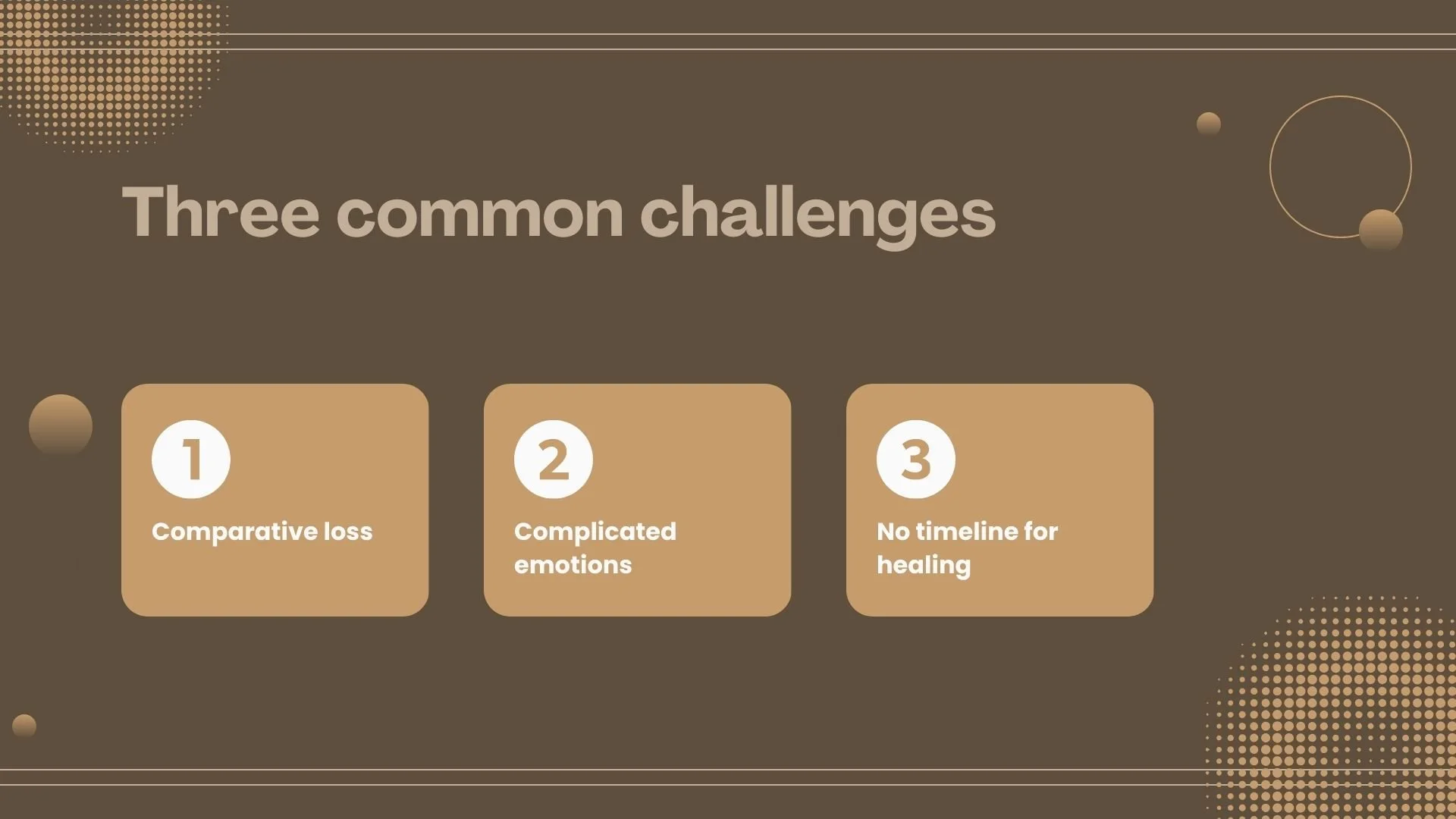
Comparative loss
There is a common myth that there is only so much suffering and grief to go around. That we must direct all resources to the most deserving of sympathy and grief. Counselors will often challenge this scarcity, with the idea that validating and acknowledging grief is essential to staying connected to our empathy.
Sure the scale of many of the ambiguous grief examples I’ve included aren’t newsworthy and are smaller in comparison to the devastation going on in the greater world. But if we pause to provide care around grief of all kinds, there is a belief that will translate to greater empathy and existing in the world. The truth is, it’s still experiencing a loss, and people are deserving of care, period.
Experts like Kenneth Doka also refers to ambiguous loss as disenfranchised grief. In NPR’s Life Kit podcast titled, “The importance of Mourning Losses (Even When they Seem Small)” he notes, “most life transitions come with losses of some form, be it graduation, moving on from a community, or reaching a milestone event.” Not all of these examples are inherently bad or horrible, but there can be complicated emotions regarding what’s no longer there.
Complicated emotions
Returning to the example of relocating to a new city for a career, there’s the potential for joy, connection, and fresh starts. But it can also be incredibly lonely and painful to face unmet expectations and adjust to a new situation. It can be normal to hold multiple and complicated emotions. There’s space for the excitement of being somewhere new, and also real frustration at things being more difficult. There can be tension and an opportunity for shame in experiencing a range of emotions. Some social supports aren’t able to hold this complexity, and it can become more tricky to find support.
No timeline for healing
Ambiguous grief can follow in grieving process as more defined grief or the loss of a life. It can be helpful to have language and knowledge of commonalities for the grief landscape. Elisabeth Kübler-Ross defined five stages of grief for those who are experiencing death. These stages of grief may be experienced sequentially, in their own order. and some people may skip stages. They are denial, anger, bargaining, depression, and acceptance.
As grief research continues, David Kessler, has identified a sixth stage of grief, meaning. This meaning making can be a way to honor who or what was lost. Claire Bidwell Smith, LCPC has identified a different missing stage in her grief work, which is anxiety caused by loss.
One of the challenging aspects of navigating grief is there is no timeline for processing grief, it’s very much not a one size fits all. It’s the truth, even if it’s messy.
How do you cope with ambiguous grief?
It’s critical to identify and validate the loss someone is experiencing. This helps to process what’s happening and not feel shame for a human response. From career disruptions, care taking, moving, and shifting identities, these experiences bring an emotional response.
By validating ambiguous grief there is greater opportunity for healing and connection. Sometimes people find it helpful to reach outside their existing community to find validation and support. This could include support groups or professional counselors. Grief deserves acknowledgement and compassion, and I wish you mental health support when you encounter an experience like this.