What is work anxiety?
A counselor’s perspective
Anxiety can be pervasive, impacting not just how we feel, but how we live, connect, and work. Anxiety rooted in work can be especially difficult, as it’s connected to our financial security, identity, and even healthcare access. In our culture which glorifies productivity, efficiency, and hustle, the emotional toll of work-related anxiety is frequently overlooked, minimized, or normalized. In the moment, the compounding pressure can be overwhelming to imagine an alternative.
What are the symptoms of work anxiety?
Feeling stress or anxiety is a part of everyday life, but it crosses over into something more distressing when there is a persistent, intense, and out of proportion amount of worry or fear about everyday situations. An overview of anxiety disorders from the Mayo Clinic includes following physical symptoms as common:
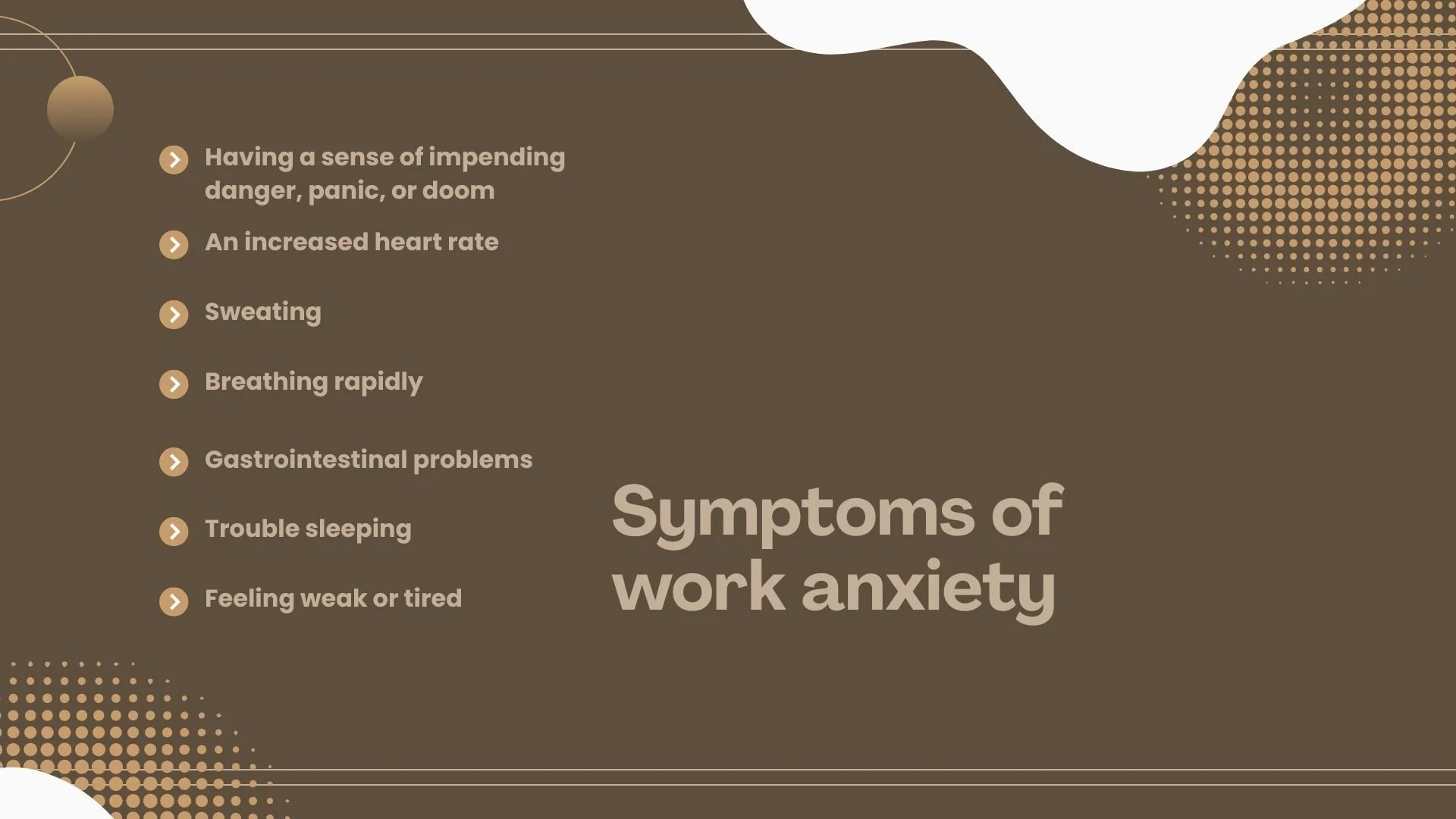
Symptoms of work anxiety
Behaviors at work which could be related to anxiety or an anxiety disorder related to work can include mention of the above physical symptoms, as well as the following performance related symptoms according to a WebMD article by Madeline Laguite:
Decrease in performance
Excessive absences
Appearing less or disengaged in work
Decreased job related productivity
Avoiding specific tasks
Speaking up less in meetings
Perfectionism
In an effort to self manage work related anxiety, some individuals may increase their consumption of alcohol or marijuana, which can also be considered normal coping within their workplace. There can be changes in motivation both at work and for activities outside of work which once brought joy and meaning, resulting in feeling like life gets smaller. Relationships with family and friends can begin to suffer, sometimes with complaints that the relationship has been hijacked by a person’s work.
The above symptoms can also be tied to other medical or mental health conditions, so it is essential to seek professional support in diagnosis and supporting with a plan forward.
What is psychological safety?
Dr. Dennis Stolle, PhD, defined psychological safety as, “the feeling that people have at work that they can truly express themselves and share their ideas and opinions without any negative consequences” on the podcast Speaking of Psychology.
When safety is missing around voicing concerns, asking questions, or providing input is absent, many people can start to internalize problems which are often systemic. This in turn can negatively impact self-esteem or self-concept. We see clients blaming themselves for burnout, overextending to meet unrealistic expectations, and accepting toxic behaviors, because, “it’s what we all have to do here.” This happens across industries, and is more prevalent when there’s a scarcity mindset.
As Dr. Dennis Stolle, PhD, directs individuals navigating burnout or a toxic workplace need to begin with speaking to someone they trust. A safe person often has the objectivity to validate and identify toxic or harmful situations. Violations of boundaries, scarcity mindset, and exceeding expectations can become normalized to the point they may no longer even seem problematic.
Often this trusted and safe person is someone removed from the situation, and can include a therapist or counselor. By introducing professional support, it can relieve pressure from relationships which may have felt hijacked by your work.
There is then an opportunity to make positive changes in life to change the things which can be controlled, adapt habits, reactions, and perhaps work towards an exit plan. This is all in service of changing your relationship to work and moving towards a life in better alignment with values and purpose. In moments of toxicity, it is difficult to see alternatives.
How common is burnout?
The American Psychological Association found, 67% of workers experienced an aspect of workplace burnout in the previous month. Burnout symptoms included a lack of interest, low motivation, low energy, feelings of isolation, and decreased effort at work.
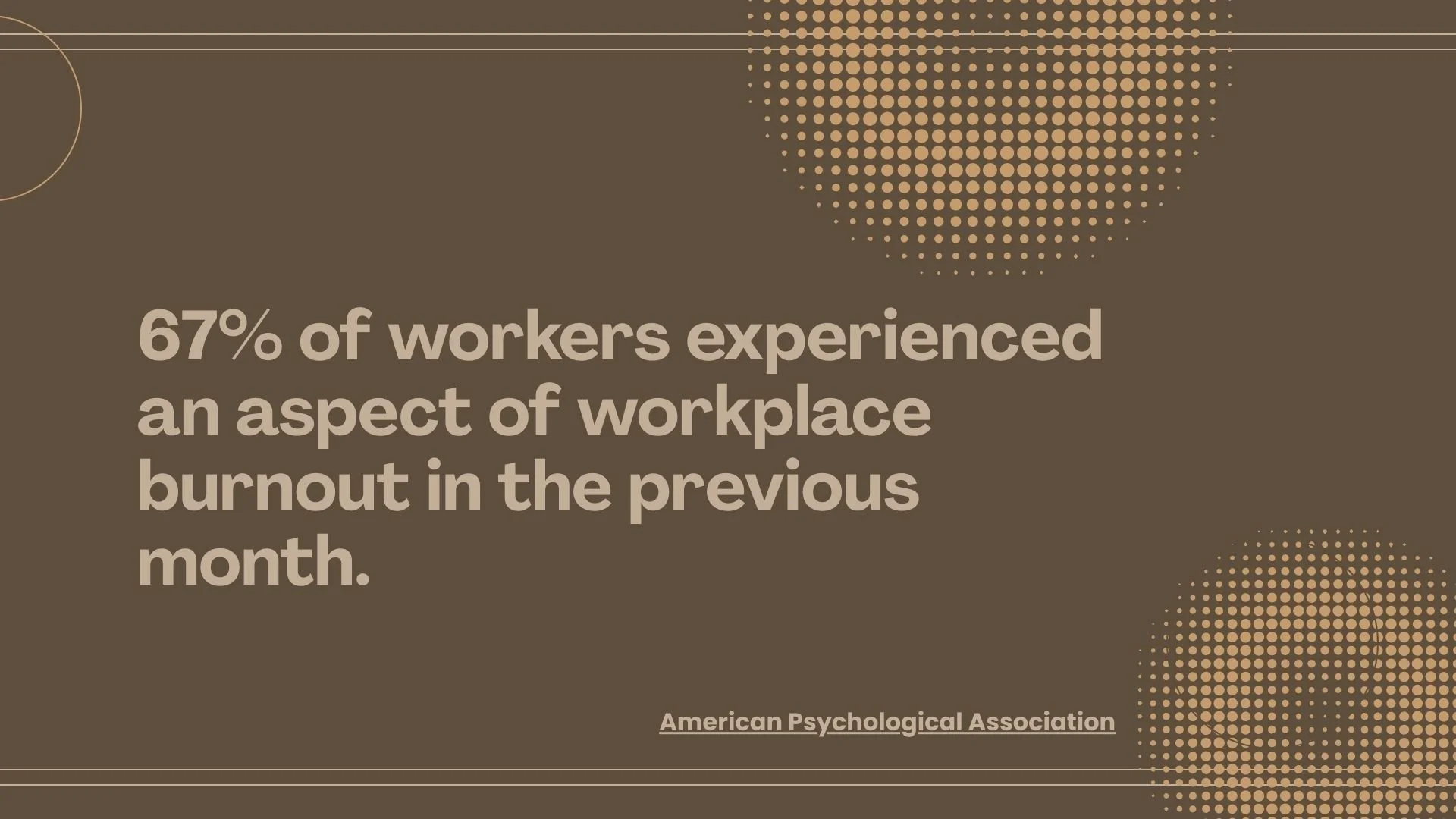
Burnout findings
Other key stats from this online survey of 2,027 employed adults in the United States:
Two in five surveyed workers feel stressed out or tense
45% of respondents reported working more hours than they desire.
“For those living with a cognitive, emotional, learning, or mental disability, 24% reported a toxic workplace experience, which is significantly higher than those not living with a disability (14%).”
These stats aren’t intended to overwhelm, but they are illustrative of shared experiences of burn out and anxiety as the workplace continues to evolve. I include these stats to normalize burnout and struggles in the continually evolving workplace.
How can therapy help with work-related anxiety?
Therapy isn’t about “fixing” you or making you more productive and develop machine-like efficiency. Rather it’s a way to gain a better understanding of yourself, your environment, and skill building to help clients lead healthier and fulfilled lives.
By broadening skills and tools
Particularly solution focused and strengths-based counseling focus on identification of skills and tools to improve situations. Clients arrive at therapy with their own blend of skills and tools which have aided them in accomplishing what they have already.
Counselors bring additions or alternatives to help increase helpful thoughts and behaviors to best manage the emotional experience. Here are some goals to consider in therapy:
Developing greater mindfulness and grounding techniques
Learning to set and maintain healthy boundaries
Recognizing unhelpful thought patterns and emotional triggers
Understanding and differentiating how past experiences inform current responses
Creating a life aligned with values
One of the benefits of therapy is the lack of judgement, which can allow you to explore values, strengths, and weaknesses beyond the scope of a workplace. Identifying values can bring focus and direction to what matters to you, both inside and outside of work. By increasing actions which align with values, it can bring greater meaning and satisfaction to life. This exercise can be helpful in changing your perspective about certain responsibilities or can provide information about what is lacking. By acting in alignment with values, it allows someone to make more empowered decisions, leading to purpose, fulfillment, and peace. As counselors, we also describe this as the difference in knowing you are running towards something, and not just running away.
Acknowledging the impact of trauma
The unfortunate reality is most of us will experience trauma at some point in our life. It could be “capital T trauma” or “little t traumas.” Sometimes they can occur in the workplace, and sometimes they occur outside, but permeate to other areas of life. What’s important is reaching out and gaining care and support for yourself and knowing you are not alone as you go through whatever it is that’s happening for you.
For adult children of emotionally immature parents, they may find themselves repeating patterns from childhood with their own parents of consoling or overcompensating in their current relationship with an overbearing and boundary crossing manager. The employee can find themselves overextending and burning out because they are repeating coping patterns which served them in their childhood, but there are other ways to cope with imbalanced power dynamics and break patterns.
What next?
Many of us will experience work-related anxiety or burn out. This experience is valid, and there is hope and help. If you are experiencing work-related anxiety or burn out, know you are not alone. There are opportunities for change, growth, and balance. These challenges do not need to be navigated alone, and consider counseling as a means of support. If this article resonates with you, consider scheduling a free initial consultation with me. I wish you well!