Burnout FAQs
Those experiencing burnout can feel exhausted before they start the work day and feel out of proportionally short or argumentative with their customers or coworkers. It can be hard to focus or feel satisfied with their job or career. Sleeping habits, diet, and physical aliments can all be tied back to burn out. More tangible signs of burnout can include feeling removed or isolated from co-workers. Check out this inventory from the Mayo Clinic for more signs of burn out.
The physical and cognitive signs of burnout
You may be surprised to learn that burnout isn’t yet a medical diagnosis like anxiety, depression, or adjustment disorder. The World Health Organization defines burnout as a result of not managed chronic workplace stress with three dimensions.
Low energy or exhaustion
Feeling negatively or cynically related to your job (also known as mental distancing)
Reduced professional performance (and feelings of achievement tied to work)
Burnout can have overlap with depression and anxiety, but they are managed differently. Changing from one job to another will not solve underlying or adjacent depression, and a counselor or helping professional can help identify additional coping skills and support.
Burnout for years can be a real thing, and it’s difficult to know what to do when if you’re burned out. There is hope and change.
Actions to take when experiencing burnout
-
First, know that you are not alone, and there is nothing wrong with you for experiencing burn out. You aren’t working in a vacuum and it’s important to look at the broader picture or ecosystem you’re working within.
-
If possible, work in boundaried breaks from your work. It could be a mental health day, sick day, leave of absence, or even quitting your job. The sometimes most challenging part of stepping away is also taking a break from needing to accomplish things or be productive. Eventually, often with the help of a counselor, you’ll find a way to get in touch with your values and wants.
Stepping away can be a privilege not always possible to everyone. The bills must be paid, caregiving doesn’t stop. Let’s not feel guilty and keep moving forward if a break isn’t possible. You can still make progress without hitting the stop button.
-
It’s time to go back to basics and Maslow’s hierarchy of needs. Do you have food or water? Shelter? Extra sleep? Human interaction? A common indicator for many corporate employees is when iced coffee replaces water or a meal. That’s a start, but how about adding in a café snack and grabbing a water too?
Another sign things are busy are when the best-intentioned fresh vegetables take up rent in your fridge until you throw them out. We can accept home cooking might not be happening right now. How about frozen or prepared meals?
-
Counselors, therapists, and social workers are all here to provide talk therapy or CBT, if you prefer those options. They can provide professional experience tailored to your situation to lead to recovery and address potential adjacent metal health conditions like depression, ADHD, or anxiety. Specific goals could include emotional regulation, relaxation or mindfulness skills, assertiveness and boundaries work, and problem-solving skills.
It can also be helpful to speak to a medical provider, as signs of burnout can overlap with signs of another medical condition, they can provide support and treatment around.
If you have family, co-workers, or folks within your network to talk to about your burnout, that’s amazing! Shame and isolation aren’t helpful. You can also control the amount of information you share or don’t. Perhaps, you don’t need to tell your daughter’s friend’s mom that you are taking a medical leave, but you could ask if they could help more with the carpool.
I’ve also seen clients schedule their therapy appointment in the middle or end of the day so they have to step away from work (or be charged the late cancellation fee), and it can force coworkers to problem solve in their absence.
The reasons behind burnout
Research from the International Journal of Environmental Research and Public Health finds two indicators which can lead to and maintain burnout. They are the workload and overall emotional demands of the organization and individual factors like personality and coping strategies.
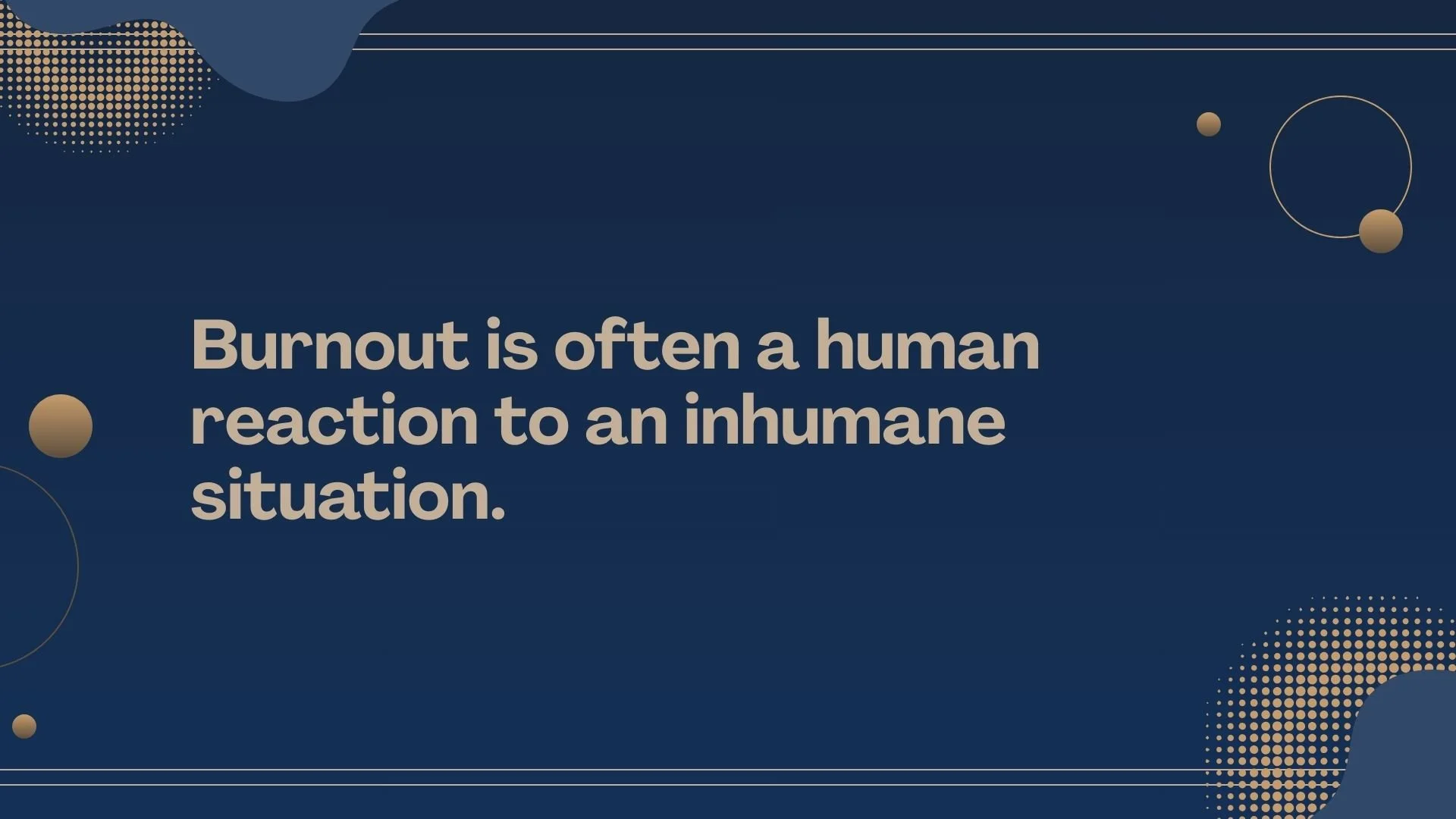
Burnout quote
It’s not that people with burnout are weak or have a failing. Rather they are having a reaction to a particularly demanding environment. Aside from winning the lottery and never working again, it is possible to build skills and protective factors to alleviate or decrease burnout and work-related stress.
When we experience burnout, our tolerance for stress becomes lower. This means things we might be able to brush off suddenly solicit a greater response. Anger, exhaustion, and frustration become more readily available responses. It can be more difficult to come in contact with hope, solutions, or perspective. A counselor can help you identify these patterns and modify your body’s responses.
There’s no set duration for burnout recovery
There’s no definitive timing range for burnout, regarding how long it takes to start, how long burnout lasts, or how long to expect recovery to take. Adding healthy coping skills and being in a less demanding environment are beneficial steps to reduce burnout in the immediate and be protective measures for managing burnout.
Risk factors for burnout
“Burnout: A Review of Theory and Measurement” published in the International Journal of Environmental Research and Public Health identified several organizational factors which can increase the risk of burnout, and I’ve included below along with my own commentary. These risk factors include overwork, increased emotional labor, lack of autonomy, and poor supervision.
I encourage you read the above linked article for a robust review of risk factors and preventative actions both individuals and organizations can take in reducing burnout.
Protective factors against bornout
After experiencing burnout or a less healthy workplace, it can be a challenge to know green flags or what is supportive. Of course, everyone’s individual needs and tolerances are different and a counselor can help in navigating a job transition.
Below are a few thought starters supported by client perspectives and “Burnout: A Review of Theory and Measurement.”
Boundaries with work: There is not an expectation of always being reachable or on. Some workplaces manage this with rotating on call schedules. Others will build in distinct non-email hours. There are options, and it’s important to know you can walk away and the workplace and relationships will still be standing.
Clear role definition. Personal efficacy increases when you know what you are responsible for completing and how success will be measured. When roles on a team begin to blur and suddenly responsibilities have been heighted without appropriate resources, burnout can creep in. Clear role definition also can indicate a progression path and acknowledgement of your contributions to the organization. I encourage clients to ask about the onboarding and continuing education process when interviewing. This can indicate the investment in individuals and provide information as to how much or little structure an organization possess.
Autonomy: You knew micromanagement would find its way here! Lack of freedom can lead to feelings of stuckness, resentment, and disempowerment. Clear expectations for roles is kind and can lead to feelings of personal self-efficacy. – onboarding process, training and investment, time management.
Advocacy in your supervisor: No one enjoys being singled out in a meeting by their supervisor, especially when it is a shaming or demeaning manner. You as an employee are also investing their time and resources in the company, and your supervisor is often your primary advocate in the room when decisions above your literal paygrade are occurring. This can be compounded when there is internal organizational.
Community: It’s important to know there is solidarity in your struggles. Access to peers to vent with and bounce possible solutions with can be inspiring. Mentors can provide additional direction where your supervisor might not be able to assist. Building resources and a network can continue to help navigate burnout.
Closing thoughts
Change and recovery from burnout are possible, it’s not a one size fits all approach. If you’d like to start a conversation to address burnout or work related anxiety, I can be reached at Kelly@KellyHemphillCounseling.com.